Sep 26, 2026
5 min read
Support independent cultural criticism by subscribing to Soraya [dot] Press. Upgrade to a membership to sustain and grow this publication, or leave a tip. Thank you!
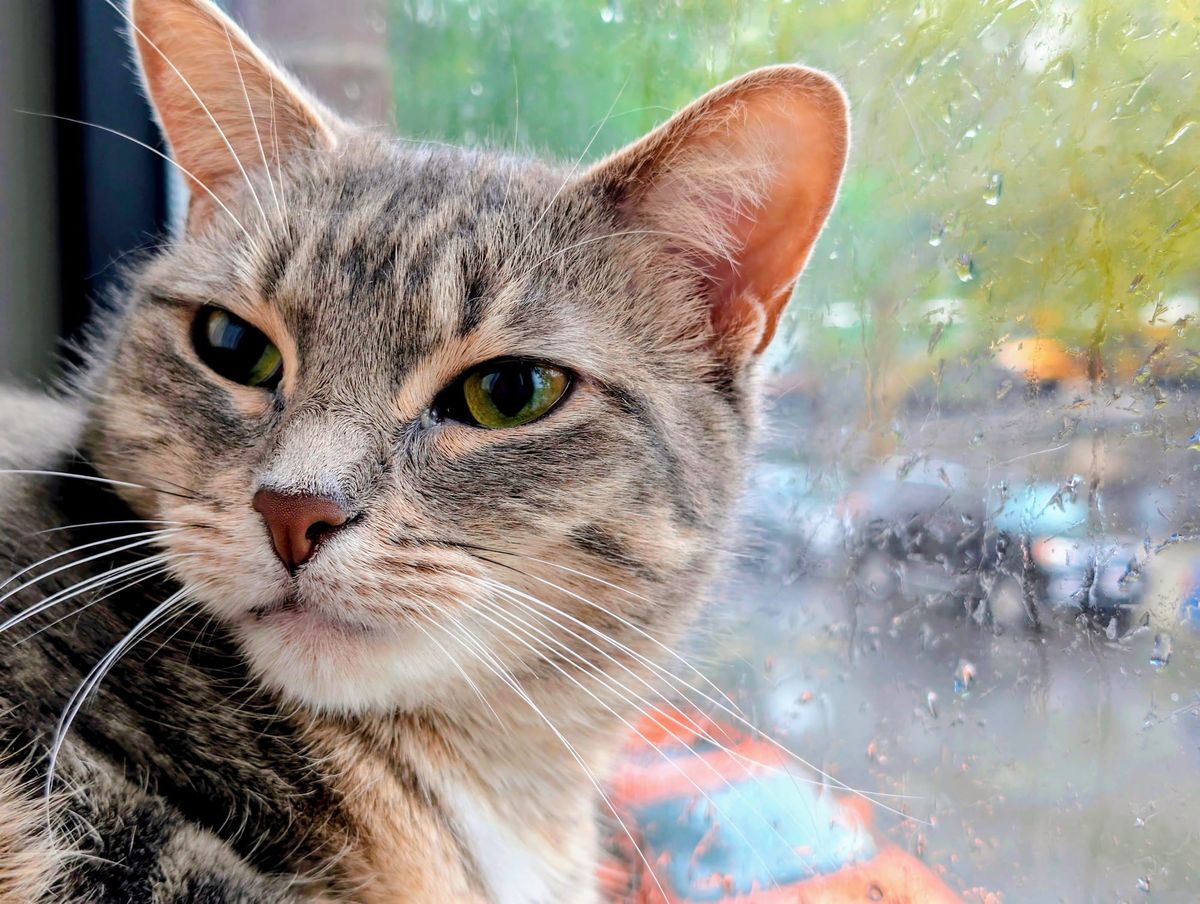
Good evening and welcome to the inaugural Caturday Evening Post, in which I open up my notebook and my photo roll a little more. As I write, a nor’easter is dumping a ton of rain and wind on New York. This was of some interest to Cio Cio-san, one half of the duo known as The Opera Kitties. Speaking of opera …
Opera for All
If you’ve been following me for awhile, you know that I’m into opera, so much so that I am now staff—because cats don’t have owners, they have staff—to two felines named Cio Cio-san and Radamés. I adopted them last January from Brooklyn Cat Cafe and promptly renamed them after characters from Madama Butterfly and Aida. Both Cio Cio-san and Radamés suffer tragedy and heartbreak in their respective librettos, and I liked the idea of giving the characters happy endings in real life. If, at some future point I end up introducing y'all to a cat named Aida, know it’s because Radamés found himself an Ethiopian girlfriend.
Anyhow, the mayor made big news this week when he announced an initiative with the Metropolitan Opera specifically aimed at creating new opera fans. The Met is going to distribute 70,000 free tickets via online lottery this season to eligible New Yorkers. They're expressly targeting folks who’ve never been to the Met, or at least haven’t seen a performance there since 2019.
This is genuinely terrific news. Opera is a beautiful art form, but in its full, decadent glory, which is how the Met does it, it’s pretty expensive to produce. And that means tickets ain’t cheap. If the Met hopes to widen its base of patrons (which it very much needs to do), it needs to do a better job of proselytizing potential new fans. There’s evidence that simply making the live, in-person experience easily accessible creates not only new future operagoers, but future performers too.
Earlier this year, I published a piece in The Atlantic about Denyce Graves, the iconic mezzo soprano who retired from performing in January after a decorated and storied multi-decade career. I had a ball reporting that story over the course of several months, in part because it included interviewing one of Graves’ Porgy and Bess costars, Ryan Speedo Green. Two things popped into my mind the moment I saw the Opera for All news.
One was this scene from Moonstruck:
And the second was Green telling me about the moment he fell in love with opera, which I'm publicly sharing for the first time, here.
Seeing Graves in Carmen as a high school sophomore was world-shifting for him. Green was a poor kid from Suffolk, Virginia who’d spent time in juvenile detention as a 12 year old. But he made it into the vocal studies program of Virginia’s Governor’s School for the Arts and thus, ended up on a school field trip to New York.
Walking into the Met, with its red carpets, marble stairs, grand high ceilings, and crystal light fixtures, he immediately felt out of place. “My entire perception of opera was that it was, first of all white, second of all, elitist, and third of all, boring,” Green told me.
His back was to the piano in his dressing room, and a humidifier hummed beside him. He was warming up for one of Graves’ final performances. Speedo, as he told me to call him, is a tall, handsome disco ball of charisma.
“When everything shattered for me, like the moment that it became surreal, it literally changed the path of my life, was when Denyce came out as Carmen,” Speedo said. “Everything I thought about opera changed in that moment.”
Sign up for Soraya [dot] Press
culture | criticism, commentary & reporting from Soraya Nadia McDonald
No spam. Unsubscribe anytime.
Speedo is now an extremely grown and successful bass baritone in his own right. But as he told me about meeting the diva for the first time, his smitten, teenage self practically jumped out of his chest.
“She’s a beautiful woman. She made me feel every emotion I could possibly feel,” he told me of the day he saw Carmen. “Opera became real to me.”
After that show, Graves changed out of her costume and spoke to Speedo and his classmates, who were waiting for her in the Met green room.
“I specifically remember myself going up to her, and hugging her and like, her calling me her boo and and I, I was like dead and alive at the same time.”
That was the life-shifting moment Ryan Speedo Green decided he had to become an opera singer.
The broligarchs go to war over Musk
The Hollywood Reporter shared quite a scoop this week: four major social platforms are engaging in an advertising blackout of the trailer for Musk.
TikTok, Meta, YouTube, and X are refusing to allow Bleeker Street, the distributor of the new epic Elon Musk documentary from director Alex Gibney, to purchase sponsored posts for the film’s trailer. Users of those platforms, however, are still free to share it themselves. You can watch here and gain an understanding of why Musk is um, less than thrilled about its existence.
Gibney is one of the preeminent muckrakers of American documentary film. He’s the heavy hitter behind Going Clear: Scientology and the Prison of Belief, Zero Days, The Crime of the Century, Agents of Chaos, and The Inventor: Out for Blood in Silicon Valley. His stock in trade is digging up the dirt rich, powerful, underhanded people and institutions would rather remain hidden. I wonder what else the CEO of SpaceX and Tesla doesn’t want us to see! Musk was already highly anticipated, and only more so now that TikTok, Meta, X, and YouTube are colluding in this absurd, censorious blackout.
The fall release calendar is stuffed with interesting, urgent, super important documentaries this year, including My Undesirable Friends: Part II – Exile, NAZA, 14th, Edward Said: Between Worlds, Joy of Joys, Once Upon a Time in Harlem, and I Deserve a Lover Whose Every Rise Sets Fiery Dooms Raging Across the Skies, all of which I’ll be covering for Soraya [dot] Press.
Also coming this season is You Can See Everything (yep, writing about that one too), the new documentary about Theranos founder Elizabeth Holmes from director Nathan Fielder. Fielder, along with John Wilson, is an auteur of social awkwardness—both men have mastered this arena of deadpan nonfiction comedy on television. Fielder is the brains behind Nathan For You, The Rehearsal, and The Curse, which are all varying degrees of strange, uncomfortable, and riveting. Meanwhile, Wilson is debuting his feature documentary The History of Concrete. Like How To With John Wilson, The History of Concrete seems facially mundane, yet ends up yielding profound insights. He pairs his monotone narration with footage of cleverly chosen quotidian oddities, and the whole thing becomes far more than its log line or the sum of its parts.
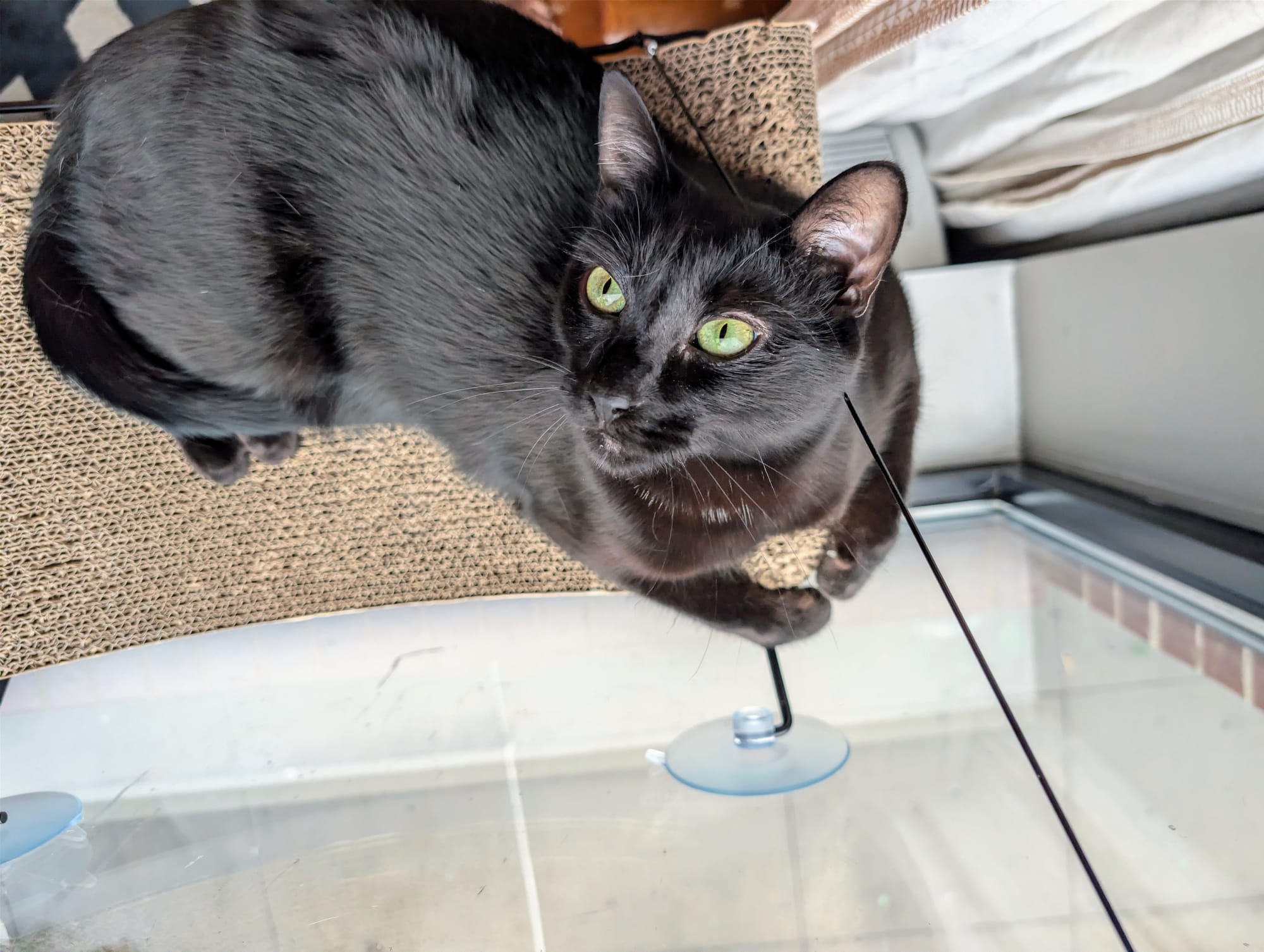
I’ve got back-to-back-to-back screenings tomorrow, so I’m going to hit the hay, especially since Radamés is literally headbutting my hand as I type this. More soon!
Tell me something good
What’s something that brought you joy and/or pride this week?