
Oct 23, 2026
9 min read
Support independent cultural criticism by subscribing to Soraya [dot] Press. Upgrade to a membership to sustain and grow this publication, or leave a tip.
Edited by Steve Reiss
Sunday night, Ann Hornaday, my friend, former Washington Post colleague, and fellow member of the National Society of Film Critics, died of glioblastoma.
She was 66. I was privileged to learn criticism by reading Ann, a 2008 finalist for the Pulitzer Prize in criticism, and watching films with her.
“She was such a wonderful person in addition to being an incredible talent,” said Steve Reiss, who was the deputy editor in the Post’s Style section, where Ann labored. “I loved how she could come on like a cloud, but there was always a touch of astringency that made you realize she was no pushover.”

It was at a press screening for Wicker that the depth of my grief began to set in. As I exited, thinking of all the screenings we'd attended together, I greeted New Yorker critic Richard Brody. He thought the world of Ann, too. Richard gave me a big hug as tears streamed down my cheeks and I told him what a charming, generous gem of a colleague Ann was during my days at the Washington Post. He remembered their interactions at the Maryland Film Festival, and that Ann was always curious and eager to discuss what she’d seen.
To honor her memory, I’m writing this review of Wicker as a tribute to Ann and all I learned from talking pictures with her.
Dear Ann,
I realize it wasn’t up to you, but I’m sure your ghost can imagine my disappointment that we never got a chance to cackle together about Wicker, which premiered at the 2026 Sundance Film Festival.
The film, about a middle-aged Fisherwoman (Olivia Colman) blessed with a rare freedom and independence but haunted by loneliness, is a cinematic pearl of folk satire and parable, fit for an audience that sees through the artifice of social media tradwife content and enjoys the risible bubonic delights of Kathleen Jordan’s The Decameron. Those who found The Favourite “rapturously vulgar,” as you put it, will find similar pleasures here, too.
Wicker, adapted by writer-directors Alex Huston Fischer and Eleanor Wilson from a short story by Ursula Willis, is one of those films that transforms the drudgery of a weekly editorial meeting into something one attends with anticipatory glee. This is because discussion of the film will happily derail said meeting into a giggle fest of puns and innuendo. (Moments like that, especially those punctuated by your lightning wit, made working in Style a treat.)
Set in a coastal English village in an indistinct period predating the advent of automobiles or pasteurized milk, we follow the Fisherwoman through her life nabbing live freshwater protein. The Fisherwoman guts her catches before offering them for sale to her neighbors, a community obsessed with maintaining an equilibrium of parochial gendered hierarchy.
Aside from the Fisherwoman and her unique status as a sexually invisible old maid, the women of the village have no identities of their own. Instead, they’re all defined—and identified—by the occupations of their male keepers, who are either their husbands or their fathers. This makes the Fisherwoman a threat. She must marry, the villagers tell her, or leave.
A lithe, blonde Elizabeth Debicki, wife of the Tailor (Nabhaan Rizwan) and daughter of the Doctor (Richard E. Grant), reigns as the village’s resident Serena Joy, clad in a woven, corseted teal frock that telegraphs the relative wealth of her household. While she doesn’t have much authority, given that it’s entirely over the other women, the Tailor’s Wife is the one woman in this world who uses a moniker outside of the village’s conventions of patriarchal nomenclature. Bonnie, forever a lass, busies herself with the canonical duties of a queen bee: gossiping about who is and isn’t getting satisfactorily plowed by the male disappointments who keep them shackled to the domestic sphere.
As such, the most exciting days in the village are the ones featuring weddings. A veiled maiden walks down the aisle and vows fealty to a man who may fulfill, if not her wildest dreams, then at least the practical material needs of her daily life. The union is punctuated with a “matrimonial collar,” literally shackled about the bride’s neck, before the couple joins their community to revel in their shared new beginning. Weddings are full of choice moments for Wicker's ensemble of less-than-worldly villagers, among them Kiell Smith-Bynoe (Ghosts) and Ella Bruccoleri (The Other Bennet Sister).
The groom’s men affix a carrot to his crotch and tie his arms behind his back so that all may enjoy the spectacle of a lucky goat munching perilously close to his procreative bits. The women have their own tradition: in lieu of throwing a floral bouquet to determine who marries next, the maidens of the village each claim a woven explosive egg that detonates into a powdery cloud of pigment. One egg is filled with a different color from all the others, and the lucky lass who lands it is the next to be married.
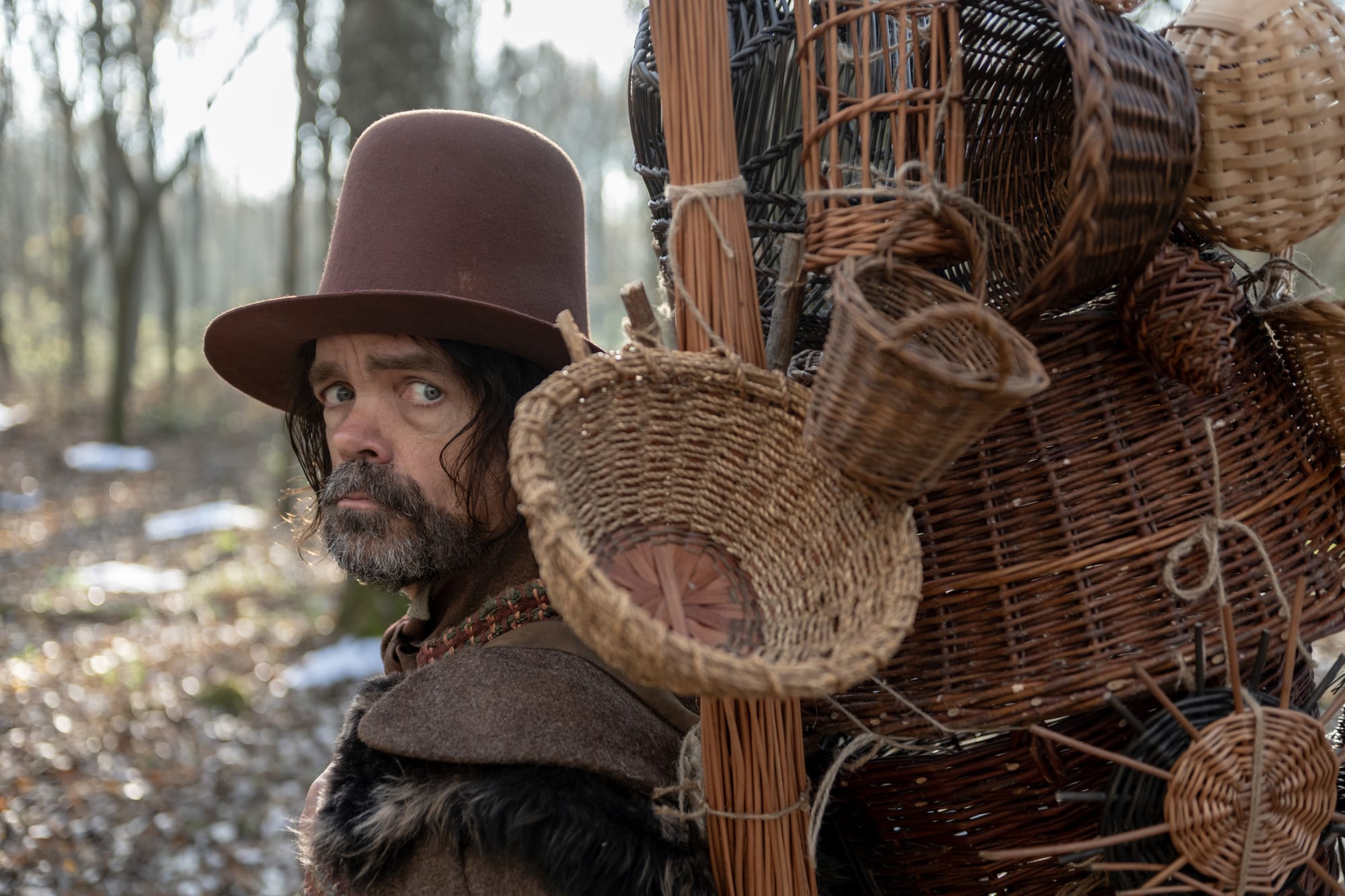
When the Fisherwoman, redolent as always with the aroma of piscine entrails, finds herself the winner of the nuptial egg, she hardly gives the village's eligible bachelors serious consideration. Instead, she commissions the Basketmaker (a wise and watchful Peter Dinklage), the same man who’s woven the creel she uses to tote her inventory, to craft her a husband in exchange for the tidy sum of three gold coins, her life savings.
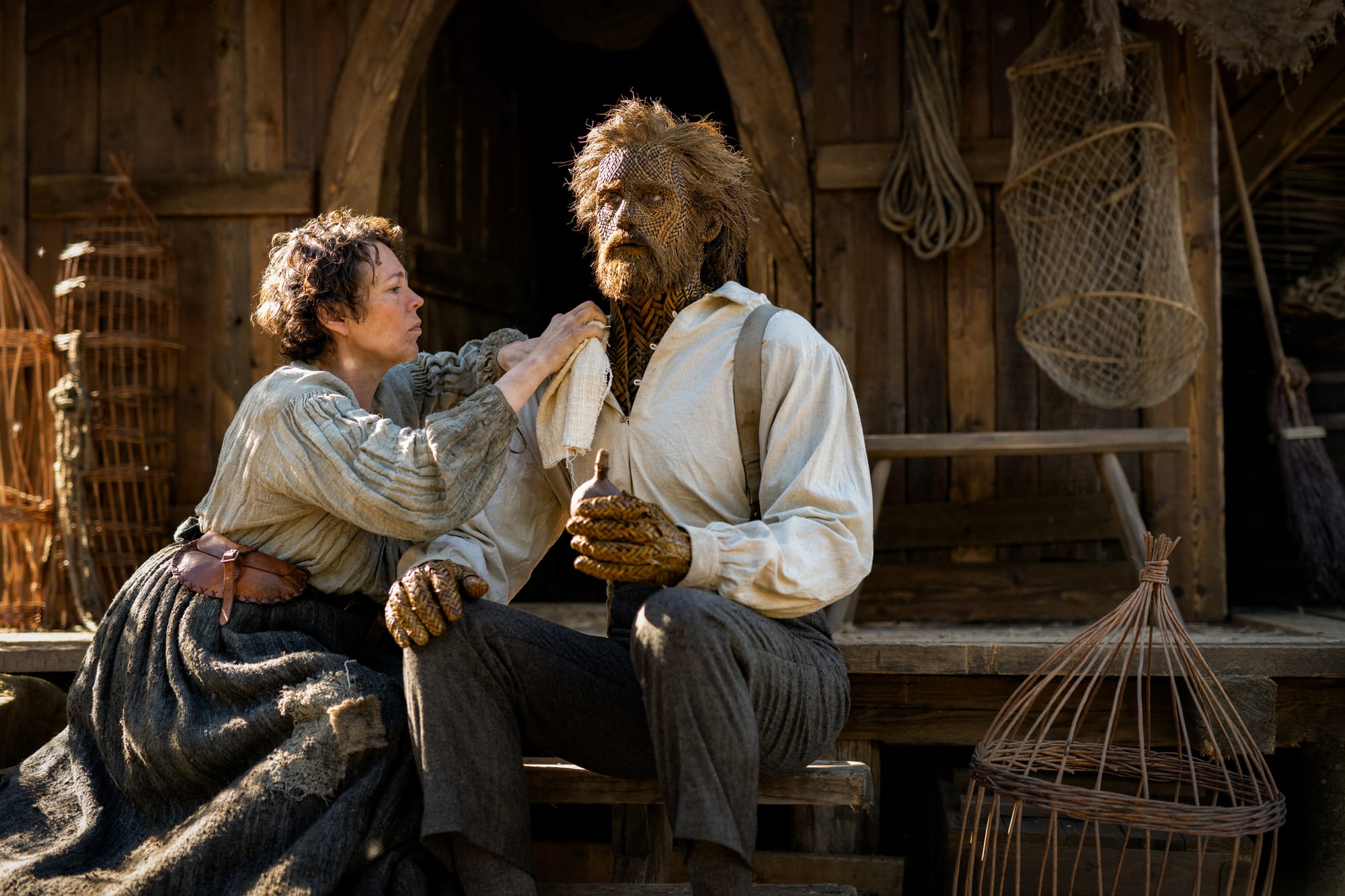
The Basketmaker, blessed with unexplained lifegiving abilities, constructs Wicker (Alexander Skarsgård), a dutiful dreamboat of a partner who is learned in the ways of ethical camping: Wicker leaves everything better than he found it. Wicker notices Fisherwoman’s thatched roof is leaky, so he fixes it. He clears the cobwebs from the Fisherwoman’s nether regions, too, offering such vigorous, consent-filled pleasure that he breaks their marital bed. So loud are the Fisherwoman’s vocal paroxysms that her neighbors sit up in their own bed and wonder, “Is someone being murdered?”
Naturally, Wicker, a man of few secrets—every time he springs an erection it sounds like he’s opening a picnic basket—repairs the bed as well.
The Fisherwoman decides to marry her willow-woven helpmate with the squeaky phallus, and their unconventional union sends the village into a tizzy. They have no need, nor want, of a matrimonial collar. The Fisherwoman continues to work outside their shared home whilst Wicker tends to it, scrubbing laundry on a washboard. (He does not prepare meals, which would require tending a fire, too dangerous for a man made out of kindling). This egalitarian contentment is just too much for the Tailor’s Wife to stand, not when Wicker’s quiet devotion prompts the other villagers to consider what’s lacking in their own lives. The equilibrium of the village begins to falter. The Tailor’s Wife, what with her unacknowledged needlework skills, turns to sowing social discontent.
I won’t spoil the rest of this quick-paced treasure, made visually delectable by production designer Renátó Cseh’s focus on the naturally occurring textures and patterns of pre-industrial life. The copious knitted textiles of costume designers Godena-Juhász Attila and Tóth András Dániel double as a sly, subtle nod to the Hebridean styles of Summerisle, the setting of Robin Hardy’s 1973 horror classic, The Wicker Man. Together with the lensing of cinematographer Lol Crawley, Wicker offers an answer to that eternal question: What if Vermeer microdosed LSD and dreamt of pagan ritualistic sacrifice?
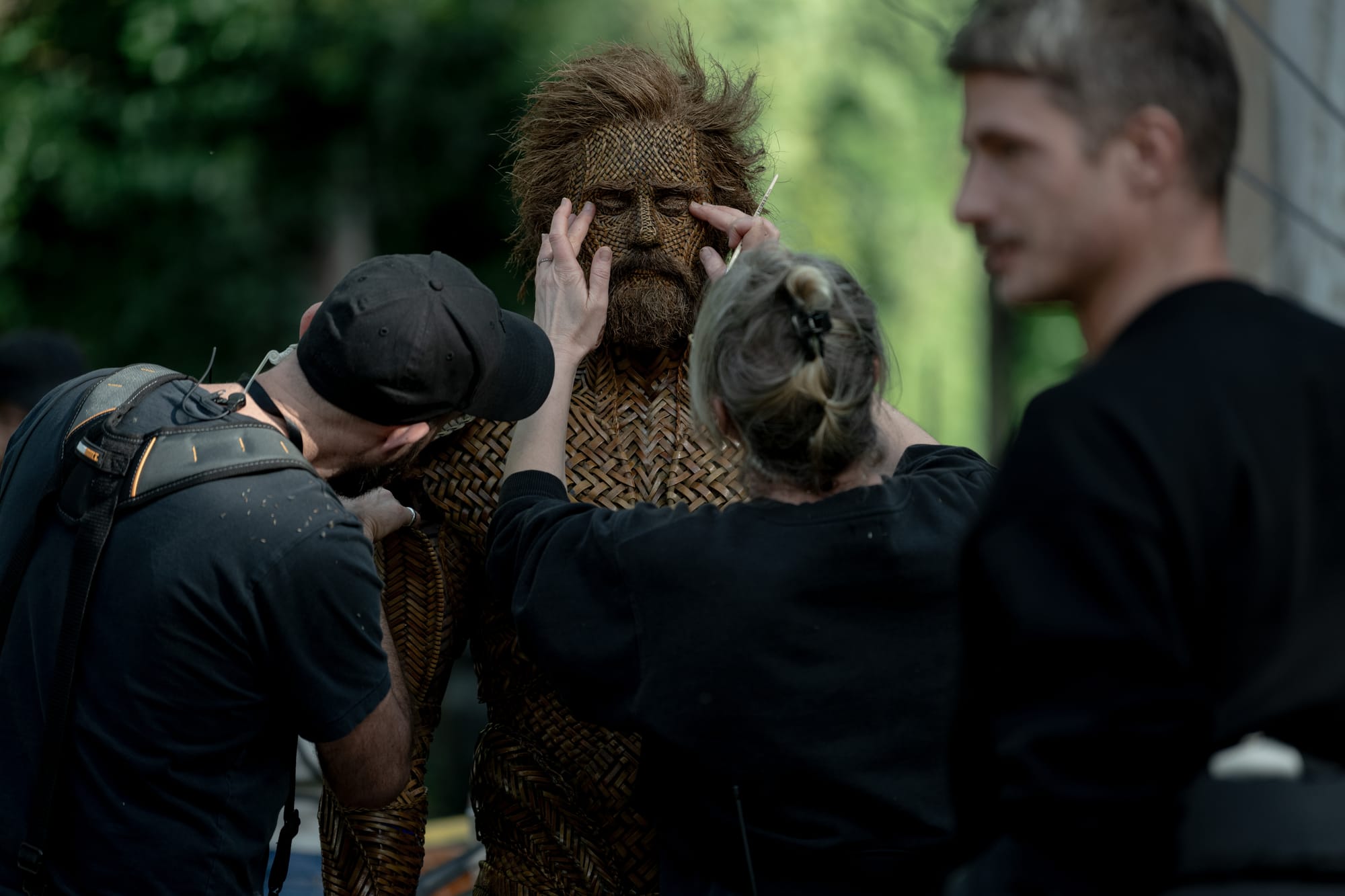
The star of this visual feast of course, is the prosthetic makeup of designer Joe Dunkley, whose seamless work will doubtless leave audiences wondering how in the world he manufactured moving, woven eyelashes, through which Skarsgård communicates a stunning amount of pathos.
Wicker would make for an intriguing double feature paired with the rainsoaked pneumoniacore of Emerald Fennell’s Wuthering Heights. Both deliver a rush of unexpected, humorous kink as they drop their viewers into worlds of gendered domination which turn powerless pretty women into mean girls and selfish agents of betrayal. Go a step further, and you can program an entire festival around its fascinating metasubtext: questions of epistemics, translation, provenance, ostension, truth, and lore, all of which Wicker engages with a comfortable lack of pretension. Such engagement justifies widening the double feature to a festival including The Wicker Man (1973), Midsommar (2019), Backrooms (2026), Sacrifice (2026), and You Can See Everything (2026).
Sign up for Soraya [dot] Press
culture | criticism, commentary & reporting from Soraya Nadia McDonald
No spam. Unsubscribe anytime.
These many layers make Huston Fischer and Wilson’s uproarious tale of carnality and petty human nastiness all the more laudable, as the filmmakers resist letting Wicker puddle into a mess of self-satisfied semiotic digressions. Modern British wicker man folklore stems from a 1676 illustration by Ayelet Sammes included in his Britannia Antiqua Illustrata, depicting a massive wooden sculpture filled with live humans about to be ignited as part of a ritual sacrifice. Sammes had an agenda of his own: he wanted to tie British history to the Phoenicians, and he generated this image after reading Julius Caesar and the Greek geographer Strabo’s accounts of Gaulish animal and human sacrifice (Caesar called the structure a simulacra and Strabo called it a kolossos). Sammes’ Wicker Image, which enjoyed the 17th century version of virality, subsequently bent and blended knowledge and story to his will. His image, together with James George Frazer’s The Golden Bough (1890) continue to inform depictions of the wicker man and wicker-associated motifs of fertility.
Once aware of pagan symbolism and the broad diaspora of derivations thereof, especially those orbiting the phallic maypole, you can’t help but notice the motif's ubiquity across a variety of forms. It’s present in Henri Mattisse’s Dance and Dance I, the 2014 game Broken Age, the annual Burning Man festival which began in 1986, and the “Love Among the Ruins” episode of Mad Men.
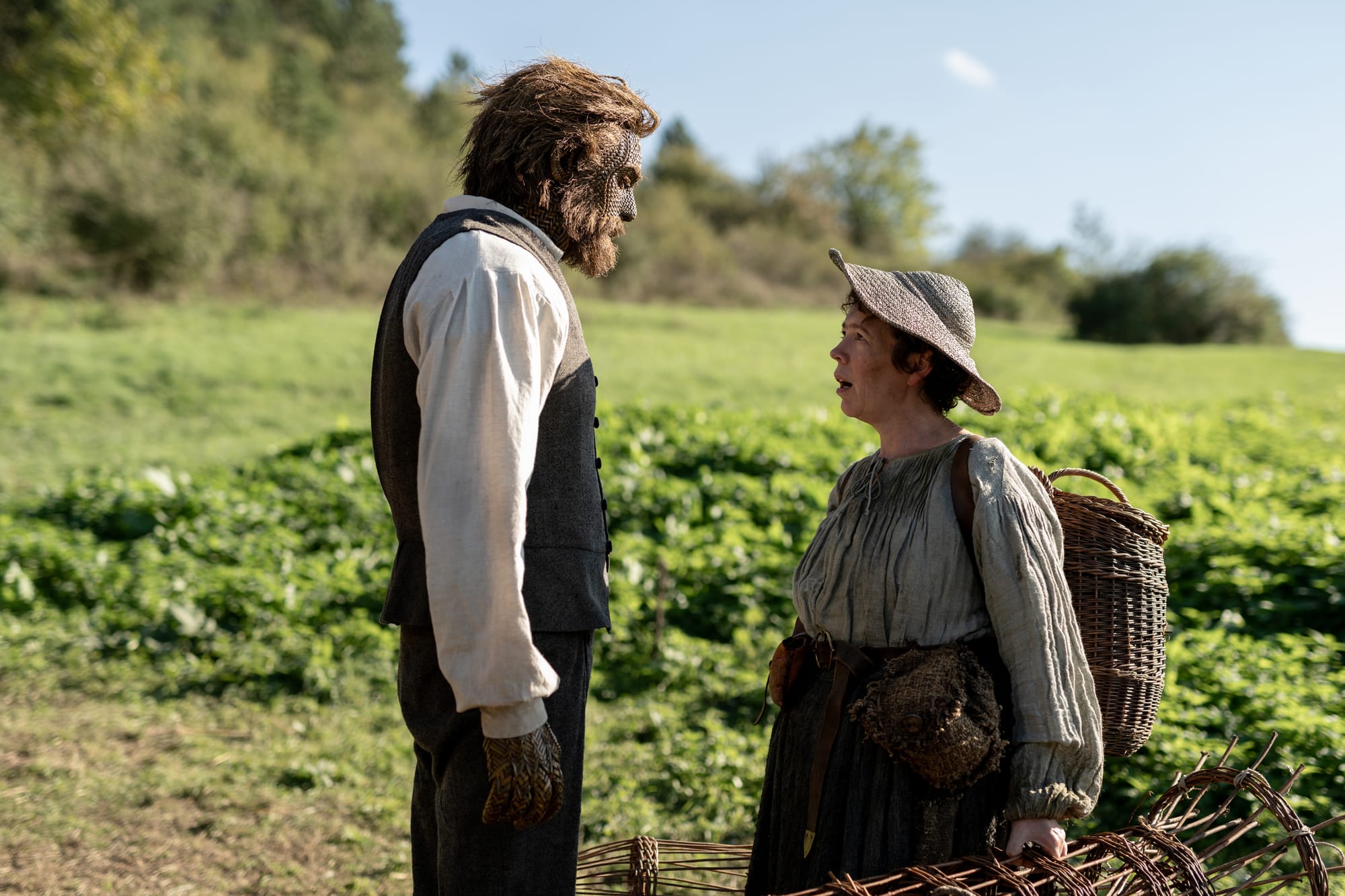
Colman’s turn as the calm, clever English Everywoman makes for satisfied, triumphant titters by Wicker’s end. Playing a national avatar of British identity (Queen Elizabeth II in The Crown) has made Colman herself a popular avatar of the same thing. She’s at her best inhabiting characters who are quietly mischievous and chronically underestimated, and it’s a breeze to root for them when Colman blesses them with her cloak of cozy, nonthreatening subversion. That broader cultural presence makes Colman the perfect casting choice for Wicker, the centuries of British folklore undergirding it, and the way the wicker man story shifts and bends with each retelling like a game of literary and cinematic Telephone.
What a joy it would have been to discuss it all with you Ann, and your former boss at Ms., the late Gloria Steinem, too. I realized in the course of writing—and rewriting—this review that many of Wicker's best qualities are ones it shares with your work. Both revel in engaging, clever writing that is rich with context, yet confidently its own thing. It's literary and joyfully pluralistic, framed by superb editing, and teeming with enviable jokes.
My heart aches at having to say goodbye this year to two trailblazing feminists whose words, written and spoken, provided the winds upon which so many of us attempt to soar. It breaks further still, to consider a Toronto International Film Festival without you and another wildly talented feminist contemporary, Soraya Roberts, departed too soon as well.
Thank you for everything, but especially the privilege of talking pictures with you. You were the best of us.
Wicker is in theaters now.